

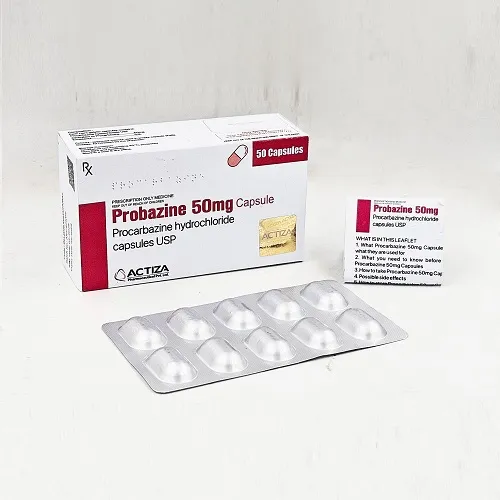
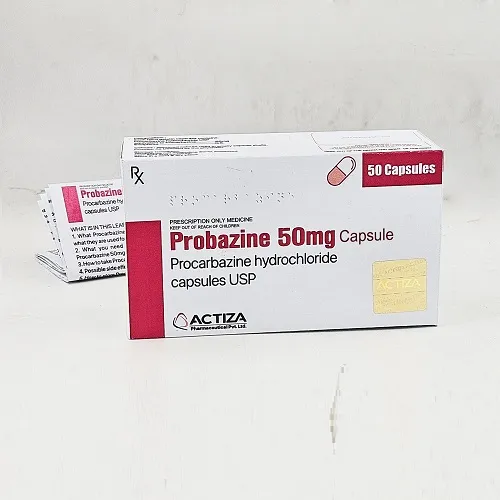
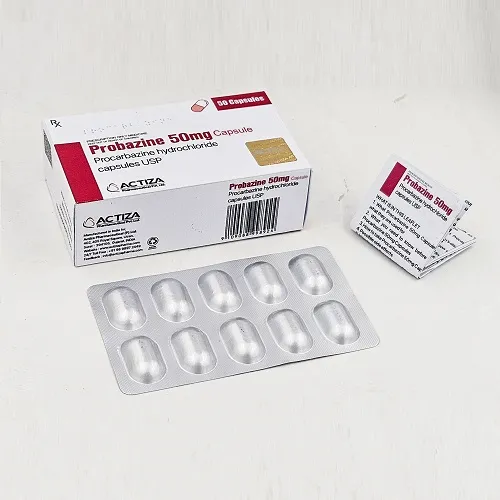
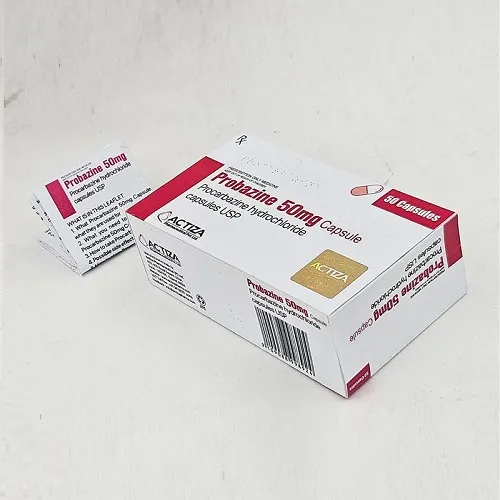
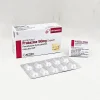
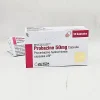
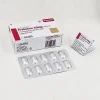
Procarbazine Capsules
| Product/Composition:- | Procarbazine Capsules |
|---|---|
| Strength:- | 50mg |
| Form:- | Capsules |
| Production Capacity:- | 10 Million Capsule/Month |
| Packaging:- | 5 X 10 Capsules / Box |
| Therapeutic use:- | Anti Cancer |
| Package Insert/Leaflet:- | Available upon request |
Introduction
Actiza Pharmaceutical is a WHO-GMP certified pharmaceutical exporter supplying Procarbazine Capsules as a finished dosage formulation not API to importers, oncology distributors and cancer programme buyers across Africa, Southeast Asia, Latin America and the Middle East.
Production takes place in a dedicated cytotoxic manufacturing block, physically separate from all other operations, with containment, operator protection and cleaning validation documented against health-based exposure limits.
Procarbazine Capsules is a WHO Essential Medicine for Hodgkin lymphoma and a component of the BEACOPP regimen widely used in resource-limited settings.
Complete CTD, ACTD and eCTD dossiers, CoPP, FSC and ICH Zone IVb stability data are supplied for direct MOH registration.
Product Overview Table
| Field | Details |
| Product Name | Procarbazine Capsules |
| INN / Generic Name | Procarbazine (as procarbazine hydrochloride) |
| Therapeutic Class | Cytotoxic antineoplastic methylhydrazine derivative, alkylating-type agent |
| Secondary Pharmacology | Weak monoamine oxidase (MAO) inhibitor drives an unusual interaction and dietary caution profile |
| Indications | Hodgkin lymphoma, in combination regimens (MOPP, COPP, BEACOPP); other uses per approved local labelling |
| API Quality | Manufactured using DMF-grade Procarbazine Hydrochloride |
| Pharmacopoeial Standard | USP Procarbazine Hydrochloride Capsules USP |
| Available Strength | 50 mg (as procarbazine base, present as the hydrochloride) |
| Dosage Form | Hard gelatin capsules HPMC shells available as a non-animal alternative |
| Key API Property | Soluble but unstable in water and aqueous solutions governs formulation, dissolution method and moisture strategy |
| Typical Excipients | Mannitol, maize starch, talc, magnesium stearate |
| Shelf Life | 24 Months |
| Storage | Do not store above 25°C. Store in original packaging to protect from moisture and light. |
| Manufacturing Facility | WHO-GMP certified DEDICATED cytotoxic block no shared equipment or air handling |
| Safety Labelling | Specialist prescriber statement; marrow suppression; MAOI interaction and dietary cautions; gonadotoxicity |
| Handling | Cytotoxic pharmacy and nursing handling precautions apply; capsules must not be opened or crushed |
| Dossier Available | Yes, CTD / ACTD / eCTD format |
| Regulatory Documents | CoA, CoPP, FSC, MOA, GMP Certificate, Stability Data, BE or Biowaiver Justification, HBEL Assessment |
Product Presentation & Specification
Procarbazine Capsules 50 mg
The single global presentation, supplied as hard capsules each containing the equivalent of 50 mg procarbazine Capsules as the hydrochloride.
Dosing in combination regimens is calculated by body surface area and delivered as a multiple of 50 mg capsules, so the 50 mg unit is effectively the universal building block for MOPP, COPP and BEACOPP protocols which is why no other strength has established itself commercially.
The Formulation Challenge Worth Stating Openly
Procarbazine hydrochloride is soluble in water but unstable in aqueous solution.
That single property shapes the whole product: it constrains the choice of excipients, it makes moisture control across shelf life a primary stability concern rather than a secondary one, and it means the dissolution method has to be developed carefully so that degradation during the test is not mistaken for a dissolution failure.
Our dossier documents the moisture control strategy, the container closure justification and the dissolution method validation together, because reviewers assess them as one argument.
Pharmacopoeial Compliance
USP: Procarbazine Hydrochloride Capsules USP is the finished-product specification most widely requested for export
BP / Ph. Eur. : confirm applicability to your SKU before claiming compliance
Release testing covers assay, content uniformity, dissolution, related substances and water content, with degradation products controlled against the monograph limits
Regulatory & Dossier Support
Dossier Availability
CTD (Common Technical Document): ICH-aligned, for regulated and semi-regulated markets
ACTD (ASEAN Common Technical Dossier): Philippines, Vietnam, Myanmar, Indonesia, Cambodia
eCTD: for authorities mandating electronic submission
Module 3 quality documentation including process validation under containment, content uniformity, dissolution method validation, degradation product control and moisture management strategy
Stability data real-time and accelerated under ICH Zone IVb (30°C / 75% RH), with particular attention to water content and degradation profile given the aqueous instability of the drug substance
Country-specific dossier customisation and regulatory query response support included
Bioequivalence for a Cytotoxic Why the Usual Route Is Closed
Standard bioequivalence (BE) studies are conducted in healthy volunteers.
For cytotoxic agents that is generally considered unethical, since healthy people would be exposed to a genotoxic medicine for no therapeutic benefit.
BE for oncology products therefore usually has to be conducted in cancer patients which is slower, costlier and logistically far harder, because the study must not disturb the patient’s existing treatment schedule.
This is why the BCS-based biowaiver route carries more value for oncology products than for almost any other class, and the FDA has granted BCS-based biowaivers for a number of cancer drug substances on exactly this reasoning.
The complication specific to procarbazine: the drug substance is soluble but unstable in aqueous solution.
A biowaiver argument rests on solubility and rapid dissolution data across the physiological pH range, and instability during testing makes that data package harder to generate and harder to defend
A second complication: some regulators take the position that cytotoxic products may not be exempted from in-vivo BE even where BCS criteria appear to be met, precisely because of their toxicity profile.
So the biowaiver is a route to be argued, not assumed
Our recommendation to partners: seek scientific advice from the target authority early, before the data package is built. On this molecule the registration route is a case-by-case regulatory discussion, and building the wrong package first is the expensive mistake
Drug Master File (DMF)
Drug Master File (DMF) reference for the Procarbazine Hydrochloride API available for cross-referencing in your registration dossier
API sourced against a qualified vendor with full impurity, degradation product, residual solvent and water content characterisation
CDSCO / Indian DMF reference accepted by a large number of importing authorities shortens query cycles
Manufacturing Compliance
WHO-GMP certified manufacturing facility, audit-ready, with inspection reports shared on an NDA basis
Site Master File (SMF) available for regulatory submissions
Manufactured in a dedicated cytotoxic block not merely a contained area within a shared facility.
For a genotoxic compound, regulatory expectation and buyer expectation both point to dedicated premises, dedicated equipment and dedicated air handling with a controlled pressure regime.
Operator protection is a first-order requirement, not a by-product of product controls: procarbazine has recognised carcinogenic, mutagenic and gonadotoxic potential, and the occupational exposure programme is documented alongside the quality system
Cytotoxic waste handling and effluent management documented a standard inspection point that suppliers without genuine cytotoxic capability tend to be unable to evidence
Compliant with the requirements of NAFDAC (Nigeria), PPB (Kenya), FDA Philippines and INVIMA (Colombia)
Complete Documentation Package (Per Shipment)
| Document | Purpose |
| Certificate of Analysis (CoA) | Confirms batch quality against the agreed specification |
| Certificate of Pharmaceutical Product (CoPP / CPP) | Required for MOH registration in most importing countries |
| Free Sale Certificate (FSC) | Confirms the product is freely sold in the country of manufacture |
| Method of Analysis (MOA) | Analytical methodology mandatory dossier component |
| GMP Certificate | Confirms site compliance, including the dedicated cytotoxic block |
| Stability Data | Real-time and accelerated ICH Zone IVb, with water content and degradation trending |
| BE Study or Biowaiver Justification | States explicitly which route was taken and under which authority’s guidance |
| Dissolution Profile Report | Method validated to distinguish dissolution from in-test degradation |
| Content Uniformity Data | Batch-level assurance for a cytotoxic where dosing is BSA-calculated |
| HBEL / PDE Assessment | Toxicologist-authored exposure limit underpinning cleaning acceptance criteria |
| Cleaning Validation Summary | Swab and rinse recovery against the HBEL-derived limit |
| Cytotoxic Handling Guidance | For pharmacy and nursing staff at destination supplied with the consignment |
| BSE/TSE Declaration | For gelatin capsule shells; HPMC alternative available |
Cytotoxic Handling & Occupational Exposure
Capsules must not be opened, crushed or divided, and reference labelling directs that they remain in original packaging until administration both because of the moisture sensitivity and because of the cytotoxic exposure risk to handlers
Cytotoxic handling guidance for pharmacy and nursing staff is supplied with each consignment, covering personal protective equipment, spillage response and waste segregation
Artwork carries cytotoxic identification so that the product is visually distinguishable in a hospital pharmacy a practical safety requirement, not a branding element
A toxicologist-authored health-based exposure limit (HBEL) underpins cleaning acceptance criteria at our site, with analytical methods sensitive enough to demonstrate compliance
Buyers are encouraged to request the cytotoxic containment section of the SMF during technical evaluation; we share it on an NDA basis rather than asking you to take it on trust
Clinical Indications & Therapeutic Information
Procarbazine is a methylhydrazine derivative with alkylating-type cytotoxic activity.
Evidence indicates it acts through inhibition of protein, RNA and DNA synthesis.
It crosses the blood-brain barrier and equilibrates rapidly between plasma and cerebrospinal fluid after oral administration, which is the basis of its use in certain central nervous system tumour protocols.
Procarbazine is included on the WHO Model List of Essential Medicines under cytotoxic medicines, for Hodgkin lymphoma and also on the Essential Medicines List for Children for paediatric Hodgkin lymphoma.
This listing secures its place in national essential medicines lists and cancer programme procurement.
Principal indication: Hodgkin lymphoma, used in combination with other anticancer agents rather than as monotherapy, in regimens including MOPP, COPP and BEACOPP
WHO documentation notes that BEACOPP which contains procarbazine is often used in more resource-limited settings, which is directly relevant to demand in the markets this page targets
An interaction profile unlike most oncology products: procarbazine has weak monoamine oxidase inhibitor activity. Reference labelling therefore carries cautions covering sympathomimetics, decongestants, dextromethorphan, stimulants, certain antidepressants, alcohol and tyramine-containing foods, with a risk of hypertensive reactions.
This section of the leaflet is unusually consequential and must not be abbreviated for space.
Contraindicated where marrow reserve is inadequate; bone marrow suppression, neurotoxicity including CNS depression and mood disturbance, and gonadotoxic effects on fertility are documented in reference labelling and must appear in local artwork
Market structure: this is an old, off-patent cytotoxic with a small number of manufacturers worldwide.
Global availability has historically been fragile, which means a reliable, properly documented supplier is valued on continuity rather than on price the opposite of a commodity generic.
Primary Packaging Options
| Presentation | Packaging Options |
| Procarbazine Capsules 50 mg | Alu-Alu blister with moisture barrier, in mono-carton with leaflet and cytotoxic identification |
| Hospital / Programme Supply | HDPE bottle of 50 or 100 capsules with induction seal, desiccant and child-resistant closure |
| Cytotoxic Outer Packing | Shipper cartons with cytotoxic labelling and damage-resistant construction |
Moisture protection is a specification requirement here, not an upgrade option.
Reference labelling directs that capsules be kept in the original container to protect from moisture, and given the aqueous instability of the drug substance this is a stability requirement rather than a general precaution.
Reference labelling also directs that capsules not be mixed loose with other medicines, so unit-identifiable blister presentation has a genuine safety function in a hospital pharmacy setting.
Why Source Procarbazine Capsules From Us?
Dedicated Cytotoxic Manufacturing: Not a contained corner of a shared plant.
Dedicated premises, equipment and air handling, with cytotoxic waste and effluent management documented. GMP certificate and Site Master File (SMF) shared on request.
Honest Regulatory Route Guidance: For a cytotoxic, healthy-volunteer bioequivalence is generally not ethical and the BCS biowaiver route must be argued rather than assumed.
We tell partners which route their target authority is likely to require before the data package is built, not after.
Stability Engineered Around a Difficult Molecule: Procarbazine is soluble but unstable in aqueous solution.
Our moisture control strategy, container closure justification and dissolution methodology are developed and documented as a single coherent argument.
HBEL-Based Cleaning Validation: Toxicologist-authored exposure limits underpin cleaning acceptance criteria, with analytical methods sensitive enough to prove compliance.
This is what oncology technical evaluation asks for first.
WHO Essential Medicine, Fragile Global Supply: Procarbazine capsules is on the WHO Model List of Essential Medicines and the EMLc, with few manufacturers worldwide.
A documented, continuity-planned supplier is genuinely scarce in this molecule.
End-to-End Regulatory Support: From CoA to CoPP to FSC, all export documentation handled in-house through to MOH registration, with cytotoxic handling guidance supplied to the destination pharmacy.
Frequently Asked Questions
Q1. Do you provide a dossier for Procarbazine Capsules?
Yes. We provide complete dossiers in CTD, ACTD and eCTD formats for Procarbazine Capsules 50 mg.
The dossier includes Module 3 quality documentation, process validation under containment, dissolution method validation, degradation product control, ICH Zone IVb stability with water content trending, and full site information for the dedicated cytotoxic block.
Country-specific customisation and regulatory query support are included as standard.
Q2. Is your Procarbazine manufactured in a dedicated cytotoxic facility?
Yes, dedicated, not merely contained. Procarbazine is produced in a dedicated cytotoxic block with its own premises, equipment and air handling under a controlled pressure regime, separate from all other manufacturing.
Cytotoxic waste and effluent management, operator protection and HBEL-based cleaning validation are documented in our Site Master File (SMF), shared on an NDA basis.
Q3. How is bioequivalence handled for a cytotoxic product?
Differently from an ordinary generic. Healthy-volunteer BE studies are generally not ethically acceptable for cytotoxic agents, so in-vivo studies must be conducted in cancer patients, which is slower and costlier.
A BCS-based biowaiver can be a valuable alternative for oncology products, but some regulators decline to exempt cytotoxics even where BCS criteria appear met.
We recommend seeking scientific advice from your target authority before the data package is built.
Q4. Why does the aqueous instability of procarbazine matter to me as a buyer?
Because it drives the two things that fail in the field. Moisture ingress over shelf life is a stability risk rather than a cosmetic one, which is why moisture-protective packing is specified rather than offered.
And dissolution testing must be validated to distinguish genuine dissolution behaviour from degradation occurring during the test itself a distinction that reviewers examine and that weaker dossiers get wrong.
Q5. Which pharmacopoeial standard do your Procarbazine Capsules comply with?
Our capsules are manufactured to Procarbazine Hydrochloride Capsules USP specification, the standard most widely requested for export.
BP and Ph. Eur. applicability should be confirmed for your SKU.
Please state your market requirement at enquiry stage so the correct specification is fixed before batch allocation.
Q6. Can you supply Procarbazine Capsules under our private label?
Yes, within firm limits. We offer private label manufacturing with your brand name and artwork, and multi-lingual labelling. Safety content the specialist prescriber statement, MAO-inhibitor interaction and dietary cautions, moisture storage instruction and do-not-open-capsule direction is fixed regulatory content.
Cytotoxic identification on the carton is a hospital-safety feature and cannot be removed.
Q7. What is the MOQ and lead time for Procarbazine Capsules?
MOQ varies by pack configuration and artwork requirement.
Because production runs in scheduled campaigns within a dedicated cytotoxic block, lead time is driven by campaign planning rather than line availability.
Please contact our export team with your target market and annual forecast for MOQ, lead time and a tailored quotation.
Q8. Do you supply cancer programmes and donor-funded oncology procurement?
Yes, subject to the procurement route.
Donor and UN-funded channels may require WHO prequalification or stringent regulatory authority approval, and we will confirm our current status against your tender criteria before bidding.
For MOH-funded and commercial oncology procurement, we supply directly with the full CTD dossier, CoPP and FSC package.
Ready to Source Procarbazine Capsules FDF?
Tell us your target market and annual forecast, and our export team will respond with the applicable specification, the likely registration route for that authority, dossier format, pack options and campaign lead time.
If you are at technical evaluation stage, request the cytotoxic containment section of the SMF, the stability summary and a sample CoA.