

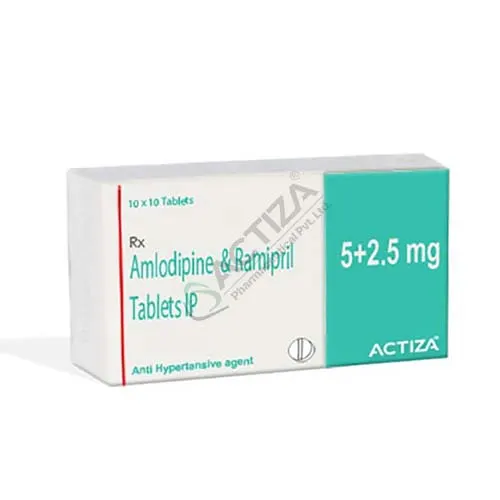
Amlodipine And Ramipril Tablets
| Product/Composition:- | Amlodipine And Ramipril Tablets |
|---|---|
| Strength:- | 5mg + 2.5mg |
| Form:- | Tablets |
| Production Capacity:- | 10 Million Tablet/Month |
| Packaging:- | 10 X 10 Tablets / Box |
| Therapeutic use:- | Cardiovascular |
| Package Insert/Leaflet:- | Available upon request |
What is Amlodipine and Ramipril?
Amlodipine is a medicine that relaxes blood vessels. It belongs to the most top class of calcium channel blockers.
Ramipril is an ACE inhibitor. It inhibits a molecule that constricts blood arteries.
When blood arteries remain relaxed, blood flows with less resistance. This reduces pressure inside the vessels.
These two medications function in various ways. Doctors frequently combine them to enhance blood pressure control.
Together, they assist the heart in pumping blood easier. This decreases the risk of strokes, heart attacks, and kidney problems from hypertension (high blood pressure).
Uses Of Amlodipine And Ramipril
These tablets are prescribed by doctors that tend to typically treat hypertension. This is the primary application.
However, they also aid in other heart-related ailments.Some people take them to avoid stable angina-related chest discomfort.
Some people use them to lower their chance of having another heart attack.
Additionally, patients with heart failure or impaired heart pumping benefit. They can slow kidney damage in diabetics.
They are, therefore, also a frequent choice for people with diabetes and hypertension.
Indications
These tablets are for adults who cannot control their blood pressure with one drug. Doctors give them to patients with moderate to severe hypertension.
They also function after a heart attack or in cases of heart failure.
Doctors may prescribe them if blood pressure stays high after using a calcium channel blocker or an ACE inhibitor alone.
Some patients need this combination due to kidney problems or increased heart strain. The drug also helps protect the body from long-term harm due to pressure.
Drug Interactions
Always tell your doctor about all medicines, herbs, and vitamins you take.
Benefits
reduces hypertension patients’ blood pressure
lessens the heart’s workload
helps those with stable angina avoid chest pain.
reduces the chance kinda long issues of stroke and heart failure
May protect your kidney function in diabetes
Suitable for once-daily use, improving convenience
Reduces long-term damage tends to high blood pressure
Side Effects
Common Side Effects:
Less Common Side Effects:
Serious but rare side effects include:
Contact your doctor if you notice anything unusual.
How Does It Work?
Amlodipine relaxes smooth muscle in artery walls. This widens the blood vessels and allows blood to flow more easily.
Ramipril blocks an enzyme that creates angiotensin II. That chemical tightens blood vessels and raises blood pressure.
By blocking this enzyme, Ramipril helps vessels stay wide and lowers pressure.
It also reduces a hormone called aldosterone. That lowers salt and water retention, easing pressure further.
These medicines work together. They lessen the strain on the heart and boost the oxygen supply to the body.
Dosage Guidelines
Take the dose as advised by your doctor.
Usual starting dose: Amlodipine 5 mg + Ramipril 2.5 mg once daily.
The doctor may increase the dose slowly.
Maximum dose: Amlodipine 10 mg + Ramipril 10 mg once daily.
Every day, take the tablet at the exact same time.
Suitable for both food and non-food consumption.
Avoid chewing or crushing the tablet.
Direction For Use
How To Use
Always follow your doctor’s and consultant’s instructions. Do not play or tend to stop without telling them.
Monitor blood pressure regularly.
Record your readings at home.
Report any side effects.
Make sure you see your doctor every few months.
Continue even if you feel well.
When Not To Use
Steer clear of this medication is very important if you have:
Amlodipine or ramipril allergies
History of ACE inhibitor-induced edema
Low blood pressure at rest
Pregnancy after the first trimester
Breastfeeding without a doctor’s approval
Serious kidney artery blockages
Consult your doctor if you have any liver, heart, or kidney problems.
Safety Advice
Do not try to drive if you feel a bit dizzy or tired after taking this tablet.
Avoid alcohol or take it in small amounts only.
Before undergoing any dental or surgical procedures, let your doctor know.
Regularly check your blood pressure at home.
Monitor kidney function and potassium levels with regular blood tests.
Please do not take it during pregnancy, especially after the first trimester.
Unless your doctor certifies it is safe, do not use it while nursing.
Concerns
You may feel tired or dizzy in the first few days. This happens as your body adjusts. Swelling in your feet may appear. It often improves with time or dose changes.
A dry cough from Ramipril is common. Tell your doctor if it bothers you. Do not stop the drug suddenly. Your blood pressure may rise quickly.
Any facial, lip, or throat swelling should be reported.
Precautions
Check your blood pressure often
Avoid high-salt foods and canned items
Do not use potassium salt substitutes
Tell doctors about this medicine before any test
Keep fluid intake steady unless advised otherwise
Warnings
This medicine can raise potassium levels. Avoid potassium-rich foods or supplements unless told. The dry cough may appear weeks after starting.
In rare cases, this could signal a serious problem. It may affect kidney function.
Your doctor will check blood tests every few months. Rarely, liver issues could arise. If your skin turns yellow, let your doctor know.
What Else Can I Do To Help My Condition?
Exercise regularly. Walk for 30 minutes each day.
Reduce stress. Try breathing exercises.
Get 7–8 hours of sleep.
Take your medicine on time.
Avoid smoking and limit alcohol.
Stay in touch with your doctor.
Special Dietary & Lifestyle Recommendations
Eat less salt – stay under 1 teaspoon (5 grams) per day.
Steer clear of processed snacks, pickles, and chips that contain salt.
Incorporate fresh produce into your everyday meals.
When cooking, choose healthy oils like sunflower or olive oil.
Eat more fish, beans, or lentils and less red meat.
Steer clear of sugary beverages like soda and packaged juices.
Ask your doctor whether you need to limit fluid intake, but make sure you drink plenty of water.
Exercise daily – try walking for 30 minutes.
Sleep well – aim for 7 to 8 hours each night.
Comparison With Other Treatments
It lowers blood pressure in two ways, protects the kidneys and heart, and is frequently more effective than taking just one medication.
Relaxes blood vessels.
May not control blood pressure fully in some patients.
Blocks certain body chemicals that raise blood pressure.
Can cause a dry cough in some people.
Reduce heart rate;
frequently used following cardiac attacks;
People who have breathing problems or asthma could not benefit from it.
What Not To Do
Don’t miss any dosages.
Keep your medicines to yourself.
Consult your doctor before stopping, and only take herbal supplements as directed.
Don’t just rely on medication; also, heed lifestyle guidance.
Storage Instructions
Keep at ambient temperature (15°C to 25°C).
Please do not remove the tablets from their original container or strip.
Defend against moisture and light.
Avoid freezing or storing in a moist environment, such as a restroom.
Stay away from kids and animals.
Safely dispose of any leftover medication.