


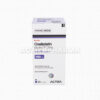
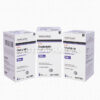
Oxaliplatin Injection
| Product/Composition:- | Oxaliplatin Injection |
|---|---|
| Strength:- | 50mg, 100mg |
| Form:- | Injection |
| Production Capacity:- | 1 Million Injection/Month |
| Therapeutic use:- | Anti Cancer |
| Package Insert/Leaflet:- | Available upon request |
Introduction
Actiza Pharmaceutical is a WHO-GMP certified pharmaceutical exporter supplying Oxaliplatin Injection as a sterile cytotoxic finished dosage formulation not API to importers, oncology distributors and hospital tender procurement across Africa, Southeast Asia, Latin America and the Middle East.
Presentations span 50 mg, 100 mg and 200 mg, available as lyophilised powder or as a ready-to-dilute concentrate at 5 mg/mL, manufactured in a dedicated cytotoxic sterile block.
Oxaliplatin is a WHO Essential Medicine for colorectal cancer and the platinum backbone of FOLFOX, so continuity of supply is the buying criterion.
Note that oxaliplatin must never be reconstituted or diluted with chloride-containing solutions a point our labelling carries prominently.
Complete CTD, ACTD and eCTD dossiers, CoPP and FSC are supplied for MOH registration.
Product Overview Table
| Field | Details |
| Product Name | Oxaliplatin Injection |
| INN / Generic Name | Oxaliplatin |
| Therapeutic Class | Cytotoxic antineoplastic third-generation platinum coordination compound |
| Chemical Description | Platinum atom complexed with 1,2-diaminocyclohexane (DACH) and a labile oxalate ligand |
| Mechanism (brief) | Requires non-enzymatic activation; the labile oxalate ligand is displaced, forming reactive complexes that covalently bind DNA producing intrastrand and interstrand crosslinks. Cycle-phase non-specific. |
| Indications | Adjuvant treatment of stage III colon cancer after complete resection, and advanced colorectal cancer, in combination with fluorouracil and leucovorin per approved local labelling |
| API Quality | Manufactured using DMF-grade Oxaliplatin |
| Pharmacopoeial Standard | USP / Ph. Eur. |
| Presentations | Lyophilised powder: 50 mg, 100 mg vials. Concentrate for solution for infusion: 5 mg/mL 50 mg/10 mL, 100 mg/20 mL, 200 mg/40 mL |
| Reconstitution (lyophilised) | Water for Injection or 5% Dextrose only 10 mL for 50 mg, 20 mL for 100 mg, giving 5 mg/mL |
| Final Dilution | 250-500 mL of 5% Dextrose Injection Only |
| Critical Incompatibility | Must Never be reconstituted or diluted with sodium chloride or any chloride-containing solution |
| Equipment Restriction | Do not use needles or IV administration sets containing aluminium parts aluminium degrades platinum compounds and contact may produce a black precipitate |
| Line Incompatibility | Incompatible with alkaline medications and media such as basic fluorouracil solutions; flush line with 5% Dextrose before any concomitant medication |
| Preservative | None single-dose vial; discard unused portion |
| Sterilisation Method | Aseptic processing terminal sterilisation not applicable |
| Storage | Room temperature. Concentrate: do not freeze, protect from light. Lyophilised powder is not light sensitive. |
| Cold Chain | Not required |
| Manufacturing Facility | WHO-GMP certified Dedicated cytotoxic sterile block |
Presentations & Sterility Assurance
Oxaliplatin Concentrate for Solution for Infusion, 5 mg/mL
The ready-to-dilute presentation, supplied at 5 mg/mL in 50 mg/10 mL, 100 mg/20 mL and 200 mg/40 mL vials.
This format now dominates in most markets because it removes the reconstitution step entirely.
That matters more than convenience: every reconstitution is a manipulation of a cytotoxic in an open system, so eliminating it reduces both preparation error and occupational exposure for the pharmacy technician.
The 200 mg vial additionally reduces vial entries per dose in adult regimens.
arget buyers: cancer centres, MOH oncology tenders, hospital distributors, NGO and donor-funded programmes
Concentrate must not be frozen and should be protected from light
Oxaliplatin for Injection, Lyophilised Powder 50 mg & 100 mg
The lyophilised presentation remains widely specified, particularly where shipping weight, ambient stability margin or established tender specification favour a dry powder.
It is reconstituted with Water for Injection or 5% Dextrose never with saline to give 5 mg/mL, and then diluted further before infusion.
The lyophilised powder is not light sensitive, which is a small but real handling advantage over the concentrate in facilities with limited controlled storage.
Preferred where tender documents specify a powder presentation or where transport conditions favour it
Choosing Between Them An Honest Comparison
| Factor | Concentrate (5 mg/mL) | Lyophilised Powder |
| Pharmacy workflow | Fewer steps; no reconstitution | Requires reconstitution before dilution |
| Occupational exposure | Lower one fewer open manipulation | One additional manipulation per dose |
| Preparation error risk | Lower reconstitution diluent error is removed | Reconstitution diluent must be correct |
| Light sensitivity | Protect from light | Not light sensitive |
| Shipping weight & volume | Higher (liquid) | Lower |
| Registration comparison | Straightforward solution-to-solution Q1/Q2 | Compare against the reference presentation in your market |
Sterility Assurance & Release Testing
Aseptic processing Grade A filling under Grade B background per ISO 14644, with media fill validation carrying the sterility argument
Sterility per USP <71>; bacterial endotoxins per USP <85> (LAL); particulate matter per USP <788>
Assay, related substances and platinum content, with the degradation profile characterised including under chloride challenge, since that is the recognised failure mode
Water content by Karl Fischer for the lyophilised presentation; pH and clarity for the concentrate
Container closure integrity across shelf life, and elemental impurities assessed per ICH Q3D given the platinum content
Regulatory & Dossier Support
Dossier Availability
CTD (Common Technical Document) ICH-aligned, for regulated and semi-regulated markets
ACTD (ASEAN Common Technical Dossier) Philippines, Vietnam, Myanmar, Indonesia, Cambodia
eCTD for authorities mandating electronic submission
Module 3 quality documentation including aseptic process and media fill validation, lyophilisation cycle validation where applicable, container closure qualification, elemental impurity assessment and degradation product characterisation
Stability data real-time and accelerated under ICH Zone IVb (30°C / 75% RH), plus in-use stability for the reconstituted and the finally diluted solution
Compatibility data for the administration system, covering the aluminium restriction and the dextrose-only dilution requirement
Bioequivalence Self-Evident, With One Comparison to Get Right
Oxaliplatin is given by intravenous infusion, so absorption is not a variable and regulators treat bioequivalence (BE) as self-evident for a parenteral product containing the same active and inactive ingredients in the same concentration as the reference.
In practice the comparison is unusually clean for this molecule, because oxaliplatin formulations are simple the concentrate is essentially drug substance in water for injection, and the lyophilised presentation is drug substance with a bulking agent.
The one thing to get right is which presentation the reference product in your market actually is.
A concentrate-to-concentrate comparison is straightforward.
Comparing a concentrate against a lyophilised reference, or the reverse, is a different argument and should be settled with the authority before the dossier is compiled
Comparative characterisation assay, pH, related substances, platinum content, particulate matter and behaviour on dilution in 5% Dextrose is supplied to support the waiver argument
Because the diluted solution has a defined in-use window, the dossier documents stability of the finally diluted product across that window rather than only at time zero
Drug Master File (DMF)
Drug Master File (DMF) reference for the Oxaliplatin API available for cross-referencing in your registration dossier
API sourced against a qualified vendor with full impurity, related-substance, residual solvent and elemental impurity characterisation
CDSCO / Indian DMF reference accepted by a large number of importing authorities shortens query cycles
Manufacturing Compliance
WHO-GMP certified manufacturing facility, audit-ready, with inspection reports shared on an NDA basis
Site Master File (SMF) available for regulatory submissions
Manufactured in a dedicated cytotoxic sterile block dedicated premises, equipment and air handling under a controlled pressure regime, with containment and aseptic requirements resolved through cascaded airlocks
Chloride control is a manufacturing consideration, not only a pharmacy one.
Product contact surfaces, water systems and cleaning agents are managed so that chloride carry-over cannot compromise the product this is the kind of control an informed auditor will probe
Aluminium is excluded from product contact throughout preparation and filling, consistent with the administration restriction
Water for Injection system qualified and monitored with endotoxin and conductivity trending
Cleaning validation against a toxicologist-authored HBEL / Permitted Daily Exposure, with cytotoxic waste and effluent management documented
Compliant with the requirements of NAFDAC (Nigeria), PPB (Kenya), FDA Philippines and INVIMA (Colombia)
Complete Documentation Package (Per Shipment)
| Document | Purpose |
| Certificate of Analysis (CoA) | Confirms batch quality against the agreed specification |
| Certificate of Pharmaceutical Product (CoPP / CPP) | Required for MOH registration in most importing countries |
| Free Sale Certificate (FSC) | Confirms the product is freely sold in the country of manufacture |
| Method of Analysis (MOA) | Analytical methodology mandatory dossier component |
| GMP Certificate | Confirms site compliance, including the dedicated cytotoxic sterile block |
| Stability Data | Real-time, accelerated and in-use for reconstituted and diluted solution |
| Sterility & Bacterial Endotoxin Reports | USP <71> and USP <85> no terminal sterilisation step exists |
| Media Fill Validation Summary | Aseptic process assurance |
| Elemental Impurities Assessment | ICH Q3D relevant given the platinum content |
| Biowaiver Justification (Q1/Q2) | Composition comparison against the reference presentation in the target market |
| Administration Compatibility Data | Dextrose-only dilution, aluminium exclusion, alkaline incompatibility |
| HBEL / PDE Assessment | Toxicologist-authored exposure limit underpinning cleaning acceptance criteria |
| Cytotoxic Handling Guidance | For destination pharmacy PPE, spillage response, waste segregation |
The Three Incompatibilities and a Cross-Product Hazard
Oxaliplatin must Never be reconstituted or diluted with sodium chloride or any chloride-containing solution.
Cyclophosphamide for Injection, elsewhere in this same portfolio, carries the opposite instruction its labelling directs reconstitution with 0.9% Sodium Chloride.
Two cytotoxics from the same supplier, prepared in the same hood by the same technician, with mandatory diluents that are the exact opposite of one another.
If you supply both products into the same market, this is a foreseeable preparation error with a real patient consequence.
Treat it as a labelling and customer-education obligation, not as a piece of page copy.
Three incompatibilities define oxaliplatin in practice.
All three are labelling content, and all three are things a hospital pharmacy will judge a supplier on because a correctly manufactured product can still fail entirely in the preparation room.
Our commitment: these three restrictions are carried prominently on carton and leaflet, and we supply preparation guidance in the destination language with each consignment.
Where a customer also stocks our Cyclophosphamide Injection, we flag the opposing diluent requirement explicitly in that guidance.
In-use windows: the finally diluted solution has a limited shelf life at room temperature and a longer one under refrigeration, and reference labelling notes that protection from light is not required after final dilution.
Local labelling must state the approved values for your registered product rather than reproduce a reference figure.
Clinical Indications & Therapeutic Information
Oxaliplatin is a third-generation platinum coordination compound consisting of a platinum atom complexed with 1,2-diaminocyclohexane and a labile oxalate ligand.
It requires non-enzymatic activation: in physiological solution the oxalate ligand is displaced, forming reactive complexes that covalently bind DNA and produce intrastrand and interstrand crosslinks, inhibiting DNA replication and transcription. It is cycle-phase non-specific.
Oxaliplatin is included on the WHO Model List of Essential Medicines for colorectal cancer, covering both the early-stage adjuvant and metastatic settings.
This listing keeps it inside national essential medicines lists and recurring oncology tenders.
Label indications: adjuvant treatment of stage III colon cancer following complete resection of the primary tumour, and treatment of advanced colorectal cancer in both cases in combination with fluorouracil and leucovorin, the FOLFOX backbone
Peripheral neuropathy is the dose-limiting toxicity, and it has an unusual acute form that is triggered or worsened by cold exposure.
Reference practice includes prolonging the infusion where pharyngolaryngeal dysesthesia occurs.
Cold-avoidance guidance must appear in the patient leaflet it is one of the few instructions on this product that a patient acts on directly.
Hypersensitivity reactions including severe reactions can occur, and dose reduction is directed in severe renal impairment. Both must carry through to local labelling in full.
Market structure: colorectal cancer is among the most common cancers worldwide, and FOLFOX is a first-line backbone, so oxaliplatin is a genuine tender commodity like cyclophosphamide rather than a niche product.
The competitive variables are documentation quality, presentation range and supply continuity.
Target Export Markets
Africa
Active markets: Nigeria, Kenya, Ethiopia, Egypt, Tanzania, Ghana, Uganda, Zambia, Côte d’Ivoire, South Africa
Registration support: NAFDAC (Nigeria), PPB (Kenya), FDA Ghana, TFDA (Tanzania) CoPP and FSC are the primary gatekeeping documents
Colorectal cancer incidence is rising across the region and FOLFOX is widely adopted, making this a growing rather than static tender line
Labelling: English and French artwork available for Anglophone and Francophone Africa
Southeast Asia
Active markets: Philippines, Vietnam, Myanmar, Cambodia, Indonesia, Thailand, Bangladesh
ACTD dossier format supplied as standard mandatory for ASEAN registrations
Stability: ICH Zone IVb data essential; the concentrate presentation additionally requires light protection through the distribution chain
Latin America (LATAM)
Active markets: Colombia, Peru, Ecuador, Bolivia, Guatemala, Dominican Republic
USP pharmacopoeial standard preferred; Spanish and Portuguese labelling available
CTD format with local regulatory adaptation, legalisation and apostille support
Middle East & CIS
Active markets: Iraq, Jordan, Yemen, Uzbekistan, Kazakhstan, Azerbaijan
GMP Certificate and CoPP are the primary registration requirements across these authorities
Arabic and Russian labelling available on request
Export Packaging & Supply Chain
Packaging Configuration
| Component | Specification |
| Vial (concentrate) | Type I glass single-dose vial with elastomeric stopper and flip-off seal; 10 mL, 20 mL and 40 mL fills |
| Vial (lyophilised) | Type I glass single-dose vial, 50 mg and 100 mg |
| Protective sleeve | Vial protection sleeve to reduce breakage and contamination risk in cytotoxic handling |
| Carton | Individual carton with leaflet, cytotoxic identification, and the dextrose-only and aluminium-free instructions on the outer face |
| Tender / Programme Supply | Multi-vial shipper configurations with programme overprinting |
Carton design carries an unusual burden on this product.
The dextrose-only dilution instruction and the aluminium exclusion both need to be legible before the carton is opened, because both errors happen at the point of preparation.
Putting them only in the leaflet is technically compliant and practically insufficient.
Labelling & Customisation
Private label manufacturing with your brand name and artwork, subject to unchanged regulatory and cytotoxic content
Multi-lingual labelling: English, French, Spanish, Portuguese, Arabic, Russian
Mandatory artwork content: cytotoxic identification, the chloride prohibition, the aluminium equipment restriction, the alkaline and fluorouracil line incompatibility, single-dose and no-preservative statement, in-use period, storage and light-protection statement for the concentrate, and country-specific registration fields
Logistics & Supply
Incoterms: FOB, CIF, CFR, EXW as per buyer requirement
No cold chain required. The concentrate must not be frozen and should be protected from light in transit; the lyophilised powder is not light sensitive
Tender-volume product: we plan dedicated cytotoxic sterile block campaigns against committed annual forecasts. Buyers bidding multi-year oncology tenders should confirm volumes at bid stage so capacity is reserved before the commitment is made.
Why Source Oxaliplatin Injection From Us?
Both Presentations, With Guidance on Which You Need: Concentrate and lyophilised powder. We advise on which the reference product in your market uses, so the Q1/Q2 comparison is settled before the dossier is built rather than after.
Dedicated Cytotoxic Sterile Manufacturing: Dedicated premises, equipment and air handling. GMP certificate and Site Master File (SMF) shared on request.
Chloride and Aluminium Controlled at Source: Not just a label warning. Product contact surfaces, water systems and cleaning agents are managed for chloride carry-over, and aluminium is excluded from product contact throughout preparation and filling.
Preparation Guidance to the Pharmacy Bench: Dextrose-only dilution, aluminium exclusion and the fluorouracil line incompatibility supplied in the destination language with each consignment, because this product is most often lost in the preparation room rather than in the factory.
Cross-Product Safety Flagging: Where you also stock our Cyclophosphamide Injection, we explicitly flag the opposing diluent requirement. Few suppliers do this, and pharmacy directors notice.
WHO Essential Medicine, Tender-Scale Continuity: Oxaliplatin is on the WHO Model List of Essential Medicines for colorectal cancer and moves in tender quantities. Campaigns are scheduled against committed forecasts so continuity is engineered.
Frequently Asked Questions
Q1. Do you provide a dossier for Oxaliplatin Injection?
Yes. We provide complete dossiers in CTD, ACTD and eCTD formats for both the concentrate and the lyophilised presentations.
The dossier includes Module 3 quality documentation, aseptic process and media fill validation, container closure qualification, elemental impurity assessment, degradation product characterisation, ICH Zone IVb stability and in-use stability for the reconstituted and finally diluted solution.
Q2. Why can oxaliplatin not be diluted with saline?
Because it is unstable in the presence of chloride.
Reconstitution and final dilution must never be performed with sodium chloride solution or any other chloride-containing solution.
Reconstitute with Water for Injection or 5% Dextrose, and dilute finally in 250–500 mL of 5% Dextrose only.
Q3. We also buy your Cyclophosphamide Injection. Is there anything we should know?
Yes, and we raise it proactively. Cyclophosphamide labelling directs reconstitution with 0.9% Sodium Chloride; oxaliplatin must never contact chloride.
Two products, opposite mandatory diluents, often prepared in the same hood.
Where you stock both, we flag this explicitly in the preparation guidance supplied with each consignment and recommend it be built into your pharmacy induction.
Q4. Why does aluminium matter?
Aluminium causes degradation of platinum compounds, and contact may produce a black precipitate.
Needles and intravenous administration sets containing aluminium parts must not be used for preparation or mixing.
We exclude aluminium from product contact in manufacturing and carry the restriction on the carton so the instruction reaches the person actually preparing the dose.
Q5. Should we register the concentrate or the lyophilised presentation?
Whichever matches the reference product registered in your market. Because the product is intravenous, bioequivalence is treated as self-evident where composition matches the reference, so a concentrate-to-concentrate comparison is straightforward.
Comparing across presentation types is a different argument and should be settled with the authority before the dossier is compiled. Tell us your market and we will advise.
Q6. Is your Oxaliplatin manufactured in a dedicated cytotoxic facility?
Yes. Production runs in a dedicated cytotoxic sterile block with its own premises, equipment and air handling under a controlled pressure regime.
Cytotoxic waste and effluent management, operator protection and HBEL-based cleaning validation are documented in our Site Master File (SMF), shared on an NDA basis.
Q7. Does this product need cold chain?
No. Distribution is ambient. The concentrate must not be frozen and should be protected from light in transit and storage; the lyophilised powder is not light sensitive, which can be an advantage where controlled storage at the receiving site is limited.
Q8. Can you supply at tender scale, and what comes with each shipment?
Yes, this is a tender-volume product and we plan campaigns against committed forecasts.
Each shipment carries Certificate of Analysis (CoA), Certificate of Pharmaceutical Product (CoPP), Free Sale Certificate (FSC), Method of Analysis (MOA), GMP Certificate, sterility and bacterial endotoxin reports, and cytotoxic preparation and handling guidance for the destination pharmacy.
Media fill summaries, elemental impurity data and BMR are available on request.
Ready to Source Oxaliplatin Injection FDF?
Tell us your target market, preferred presentation and annual forecast, and our export team will confirm which presentation your market’s reference product uses, the applicable registration route, dossier format, pack options and campaign lead time.
If you are preparing a tender submission, request the media fill validation summary, stability and in-use data, and a sample CoA.