

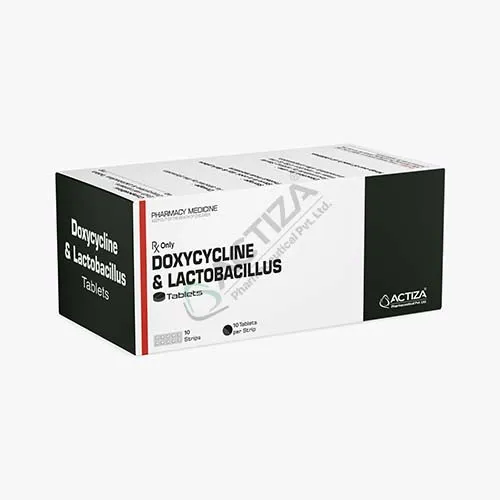
Doxycycline/Lactobacillus
| Product/Composition:- | Doxycycline/Lactobacillus |
|---|---|
| Form:- | Tablet |
| Production Capacity:- | 10 Million Tablets/Month |
| Packaging:- | 10 X 10 Tablets / Box |
| Therapeutic use:- | Bacterial infections |
| Package Insert/Leaflet:- | Available upon request |
About Doxycycline/Lactobacillus
Doxycycline functions with Lactobacillus to both combat infections and promote better digestive health.
The antibiotic medicine doxycycline works to prevent destructive bacteria from multiplying.
Doxycycline fights skin, urinary tract, and lung infections in bacterial conditions. Lactobacillus serves as a good microorganism.
It helps restore the correct balance of healthy bacteria within your digestive tract. These medications combine to end infections.
It protects against antibiotic-induced diarrhea, stomach discomfort, and bloating in patients.
Doxycycline/Lactobacillus Uses
Doxycycline:
Patients receive Doxycycline from doctors for treating different bacterial illnesses such as:
Lactobacillus
Antibiotic treatment disrupts gut flora. However, Lactobacillus serves as a critical bacteria in its maintenance. Its main functions include:
Doxycycline functions to remove pathogens during the infection. But Lactobacillus preserves total digestive equilibrium.
How does Doxycycline/Lactobacillus work?
The survival needs of bacteria are disrupted during Doxycycline. Antibiotics stop bacteria from growing by blocking proteins that help them develop.
This provides the immune system with the opportunity to combat the infection.
Lactobacillus helps restore helpful bacteria that antibiotics often remove from the body. It can reduce stomach discomfort and support better gut health.
How do you take this Medicine?
Doxycycline blocks proteins that bacteria need to grow. This stops the infection from spreading before the immune system can respond.
Lactobacillus replaces good bacteria lost during antibiotic use. It may ease stomach upset and help digestion.
Direction for Use
Have a word with a physician for correct instruction.
Benefits
Doxycycline kills bacteria to treat infections. Doxycycline is used as malaria prophylaxis in high-risk areas but is not primarily an anti-malarial drug.
Whereas Lactobacillus rebuilds intestinal bacteria that safeguard you against diarrhea development.
These two medications work together to treat infections and promote digestive health. It is used to reduce antibiotic side effects.
Side Effect
Indications For Use Of The Drug
Doxycycline treats bacterial infections of the lungs, skin, and urinary tract. It is helpful in avoiding malaria and treating Lyme disease.
Lactobacillus is helpful in bringing back the balance of good gut bacteria. It is necessary after taking antibiotics.
This can prevent digestive problems like diarrhea. Together, they fight infections and support digestive health.
Overdose And Missed Dose
If you forget the Doxycycline dose, take it immediately. If it’s time for an adjacent dose, have one. For Lactobacillus, take the missed dose when remembered.
Taking too much Doxycycline can lead to nausea, vomiting, or dizziness. In this case, you should get medical help right away.
Lactobacillus overdose is rare but may cause mild bloating or stomach discomfort.
Precautions and Warnings
Consume Doxycycline cautiously, as it can make your skin prone to sunlight. Avoid direct sun and tanning beds.
It’s essential to check with your physician if you have liver or kidney problems. Inform in case of pregnancy or nursing.
Lactobacillus is usually safe. Consult with a physician for a weak immune system or serious health issues.
Be keen on the healthcare provider’s words. Please make sure they are aware of any existing conditions.
Medications To Avoid With This Drug
Special Dietary And Lifestyle Recommendation
Don’t take iron supplements, dairy, or antacids for two hours after you have Doxycycline.
Have enough water to avoid restlessness and dehydration. Be away from the sun and apply sunscreen.
Eat a well-balanced diet heavy in fiber and probiotics to boost gut health.
Drink lots of water to keep your digestive system balanced.
Health Tips for Doxycycline+Lactobacillus
Get it one hour before or after meals. Stay hydrated and avoid sun exposure due to increased sensitivity from Doxycycline.
As instructed, take Lactobacillus to help heal your gut. Avoid antacids, iron supplements, and dairy close to Doxycycline doses.
Have a diet with plenty of fiber to enhance intestinal health. For optimal outcomes, always do as your doctor directs.
Directions For Storage
Store Doxycycline in a cool, dry place at room temperature. Place it where sunlight and moisture cannot reach.
Store Lactobacillus as directed. Depending on the form, could you keep it in a cooler or dry area? Medications should be kept away from children.