


Why Long-Term API Partnerships Matter Today
Today, the global pharma industry depends more on reliable API suppliers than ever before.
After the pandemic, companies now focus on strong supply chains, not just low prices.
Short-term buying is risky. So, long-term partnerships are becoming essential for stability and success.
These partnerships provide a steady supply. They maintain high quality and build trust. India plays a key role as a trusted API manufacturing hub.
It has a large capacity, global approvals, and proven reliability for long-term partnerships.
The Global API Market Shift toward Strategic Alliances
The global API market is shifting from price-based sourcing to long-term partnerships.
These partnerships aim to boost growth, enhance quality, and ensure a stable supply.
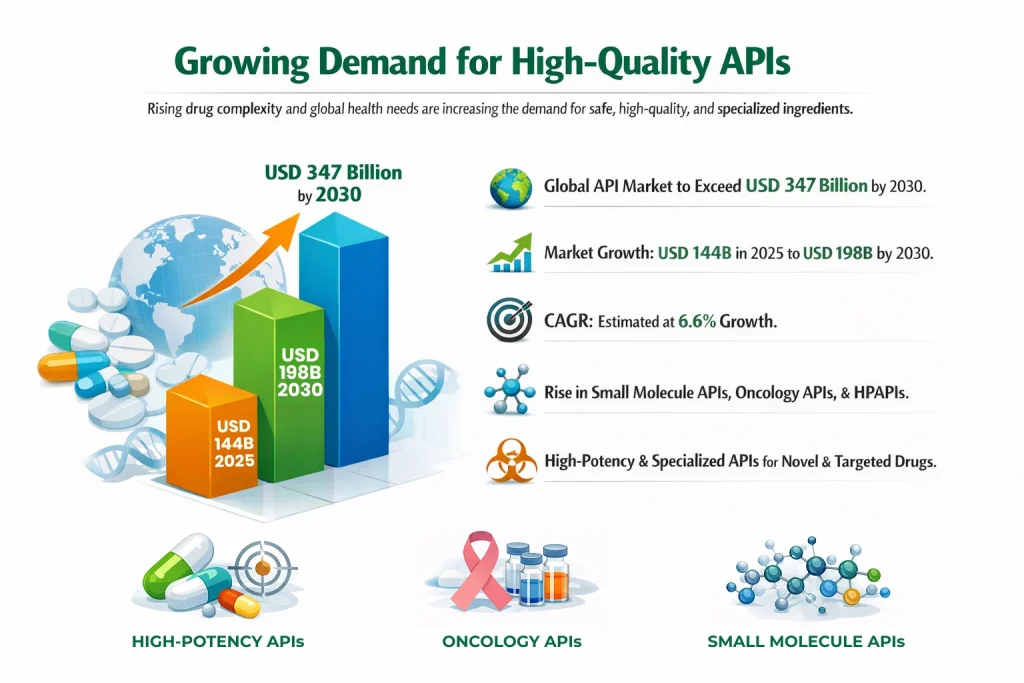
Growing Demand for High-Quality APIs
Rising drug complexity and global health needs are increasing the demand for APIs.
This is especially true for safe, high-quality, and specialized ingredients used in advanced therapies.
Regulatory Pressure on API Buyers
API buyers today face strict rules from the EU, the US FDA, and the WHO, making compliance a top priority.
Regulators now expect full transparency, strong quality systems, and detailed records.
This pressure forces buyers to pick API manufacturers.
They need to be fully compliant and ready for audits. Also, they must provide complete documentation at each stage.
Importance of Supply Chain Resilience
Pandemic-related disruptions still affect API sourcing and delivery in global markets.
As a result, pharma companies now focus on supply chain resilience.
They prefer API manufacturers that can produce and source in multiple countries.
This helps lower risk, prevent shortages, and keep a steady supply during sudden global or regional disruptions.
Core Pillars of Successful Long-Term API Partnerships
Strong API partnerships rely on trust, consistency, and shared goals.
These elements support quality. They ensure compliance and help grow the business long term.

Transparency & Communication
Being transparent is key to building trust in long-term API partnerships.
Having open conversations and regular updates can prevent surprises.
It also helps to set clear expectations. Dedicated account managers and technical teams make communication easy.
When buyers choose partners, they check their track records.
They also look at how well they follow regulations. They also look at inspection records and audit readiness.
This method cuts down risk. It helps you make confident sourcing choices.
Quality & Compliance as the Foundation
Quality is the base of every lasting API partnership. Suppliers must meet GMP, DMF, CEP, ISO, and ICH standards.
Clear documents like CoA, MSDS, and stability data build trust. Global API growth is fuelled by outsourcing.
It also relies on supply diversity. India’s API sector is on the rise, and buyers are reducing their dependence on China.
They are looking for reliable and compliant partners.
Technical Support & Knowledge Sharing
Having strong technical support can really boost API partnerships in the long run.
Indian manufacturers can help with dossier support. This makes regulatory submissions easier.
Teams work closely with buyers to solve formulation challenges early.
India’s strong regulatory documents and many WHO-prequalified APIs cut approval times.
This makes it easier to submit for global markets.
Cost Stability & Predictable Pricing Models
Cost stability builds strong, long-term API partnerships. Long-term agreements protect buyers.
They guard against sudden price changes and market swings.
Indian API manufacturers provide a clear edge with competitive pricing.
Lower manufacturing and operations costs in India help suppliers. This keeps API prices stable.
This also meets the growing global demand.
Consistency in Supply & Production Reliability
A consistent supply comes from good manufacturing. It also needs smart sourcing.
India makes more than 500 APIs, providing a steady supply for different therapeutic needs.
As the global API market grows, buyers are opting for multi-source supply chains.
Reliable production capacity helps partners avoid delays.
Zero stock-out planning and steady replenishment cycles ensure smooth API availability.
This ensures no interruptions worldwide.
How Indian API Manufacturers Build Trust with Global Pharma
Indian API manufacturers build global trust. They do this by achieving scale.
They ensure strong compliance. They also have a lot of export experience in both regulated and emerging markets.
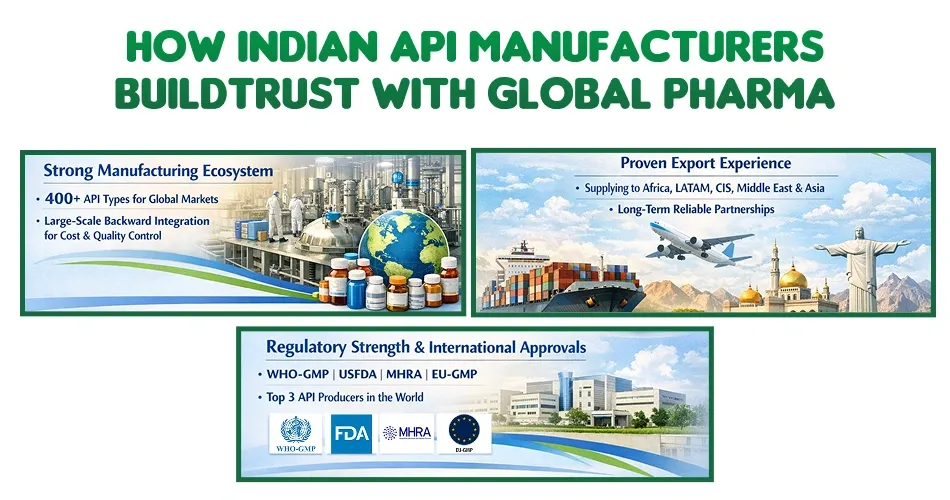
Strong Manufacturing Ecosystem
India boasts an impressive portfolio of over 400 API types for global markets.
They are reducing costs and improving quality control by using large-scale backward integration.
This robust approach guarantees a reliable supply for our pharma partners around the globe.
Regulatory Strength & International Approvals
Indian facilities hold WHO-GMP, USFDA, MHRA, and EU-GMP approvals.
India is one of the top three API producers in the world. This is due to its strong compliance systems.
Proven Experience in Long-Term Export Relationships
Indian APIs are widely supplied to Africa, LATAM, CIS, the Middle East, and Asia.
Many manufacturers offer multi-year supply agreements. These agreements stress reliability.
They also highlight consistency and trust in regulations.
Benefits for Global Pharma Companies Partnering with Indian API Manufacturers
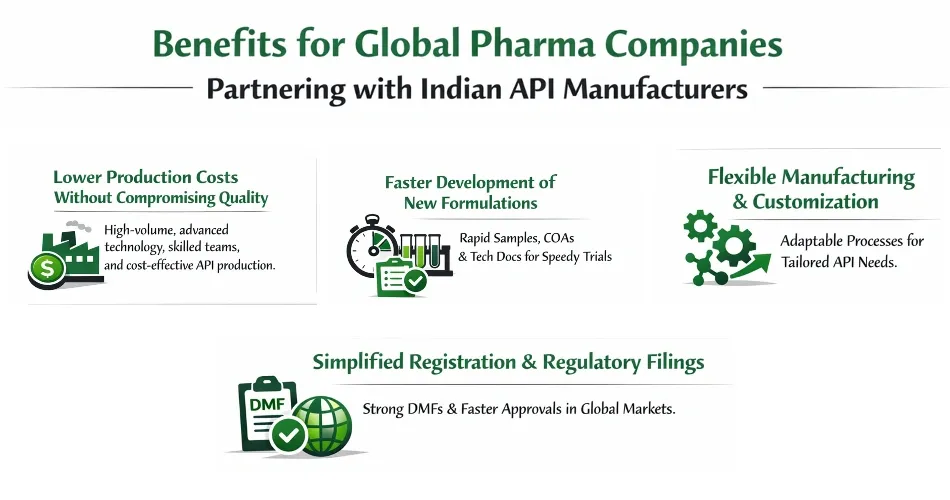
Partnering with Indian API makers helps global pharma firms cut costs. It speeds up development.
It simplifies approvals. Plus, it offers flexible and reliable supply chains.
Lower Production Costs Without Compromising Quality
Indian manufacturers gain a big advantage. They produce large volumes of goods and use advanced technology.
This helps them stay competitive in the market. Skilled teams, efficient sourcing, and a strong focus on compliance help them create APIs at a lower cost.
They achieve this without sacrificing quality.
Faster Development of New Formulations
Quick sample delivery speeds up the process. Fast issuance of the Certificate of Analysis and ready-to-go technical documents also helps.
All these factors shorten development timelines. This speed helps to do trials more quickly.
It also speeds up the shift from development to commercial supply.
Simplified Registration & Regulatory Filings
A solid dossier and strong DMFs make it easier to submit for regulations.
With clear validation data, the process flows smoothly.
Indian suppliers help buyers get faster approvals in various markets.
This leads to fewer delays and smoother journeys.
Flexible Manufacturing & Customization
Indian API manufacturers are very flexible. They adapt easily in production.
They can adjust particle size, polymorph grade, and other details.
This meets the buyers’ needs for their specific formulations and market demands.
How to Build a Successful Long-Term Partnership
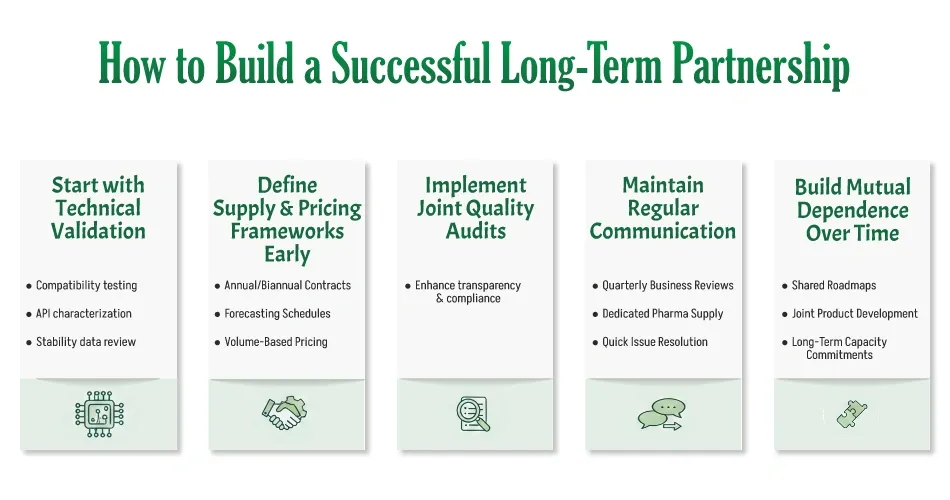
Successful API partnerships need early technical alignment. This helps to ensure long-term success.
Start with Technical Validation
Technical validation lays the groundwork for partnership. It checks product fit, quality, and regulatory readiness.
This is done before starting long-term commercial supply.
The technical checks below ensure that the API will work reliably in real production settings.
Compatibility testing
It is to make integration easy. This will help with existing formulations and processes.
API characterization
This confirms details about physical aspects. It also covers chemical and performance aspects.
Stability data review
This is to check the product’s shelf life, storage conditions, and whether it remains reliable over time.
Define Supply & Pricing Frameworks Early
Check the technical feasibility and requirements first. Then, finalize agreements.
This helps prevent delays and misunderstandings. Setting clear supply and pricing rules early helps companies avoid delays.
It also controls costs and keeps products available.
Contracts, forecasts, and volume-based pricing make planning easier.
It also builds trust between suppliers and buyers.
Implement Joint Quality Audits
Joint quality audits with partners build trust. They also keep everyone aligned on rules.
They also enhance transparency, which benefits both parties.
These audits help align processes and spot issues early.
They guarantee steady product quality and promote lasting partnerships.
Plus, they make compliance with rules and regulations simple and clear.
Maintain Regular Communication
Regular communication with pharma partners keeps operations running smoothly.
It builds trust and helps resolve issues quickly. This way, both sides stay aligned on goals and expectations.
These practices help companies stay close to partners. They also help track progress and solve problems quickly.
Build Mutual Dependence Over Time
Creating long-term partnerships means both sides rely on each other for success.
Shared goals, joint planning, and steady commitments build trust.
They also make collaborations better and more productive over time. This approach helps partnerships grow.
Case Study: How Indian API Manufacturers Improved Supply Reliability
Actiza Pharma is a leading API manufacturer in India.
It supplies diabetes-related active ingredients to its partners in Latin America. The company cut delivery times by 20% using better forecasting and planning.
This helps medicines reach the market faster. It also helps partners stick to trusted treatment schedules.
Actiza reduced partner procurement costs by 30–35% each year. This was done while keeping a steady supply, even during global disruptions.
This method built trust and created strong partnerships. It showed how planning ahead and working together can tackle supply chain challenges.
Together, we’re tackling challenges and building a way to success.
Challenges in API Partnerships & How to Overcome Them
API partnerships encounter various challenges.
These can slow down operations, raise costs, and disrupt supply.
Knowing these challenges helps companies plan better.
It also helps them build stronger and more reliable partnerships.
Documentation Delays
Late or missing documents can slow down approvals and production.
Pre-compiled dossiers have Certificates of Analysis, stability data, and safety sheets.
They make submissions easier and help to speed up approvals.
Pricing Fluctuations
Frequent price changes make it hard to plan and trust others.
Partners have a tough time predicting costs.
This can alter contracts and impact profits in current projects.
Logistics Issues
Transportation delays or route disruptions can stop the supply.
Relying on a single route raises risks. This can lead to missed deadlines and inventory shortages.
Communication Gaps
Misunderstandings between teams can cause mistakes.
They can also lead to missed deadlines and frustration. Inconsistent updates or unclear roles worsen coordination.
How to Overcome Them
To manage challenges, plan in advance, communicate well, and adopt practical strategies. This keeps API partnerships efficient and reliable.
Pre-Compiled Dossiers
Get everything ready ahead of time to avoid paperwork delays.
Gather complete files. Include:
This makes regulatory submissions simpler. It also helps to get approvals faster.
Long-Term Contracts
Agree on prices for the long term to keep them steady. This helps you build trust, manage your finances easily, and keep a good working relationship.
Multi-Route Shipping
Split your shipments into different routes. Also, have a backup plan for logistics.
This way, you will reduce delays and lower surprise risks, keeping deliveries steady.
Dedicated Manager Support
Have a partnership manager assigned to maintain contact with you.
This will help resolve any issues quickly. Centralised communication stops misunderstandings.
It also builds better teamwork.
Future Outlook: The Next Era of Global API Partnerships
The global API industry is changing fast. It now focuses on smarter sourcing.
It also highlights sustainability and in-demand therapies.
New trends are changing partnerships and creating chances for trusted suppliers.

Strategic Sourcing
Companies are moving to integrated supply chains. This change helps them cut risks.
Using multiple suppliers and regional hubs helps ensure a steady supply.
It also speeds up deliveries and makes us more resilient to global disruptions.
Green Chemistry
Sustainable APIs are becoming essential. Green chemistry practices reduce environmental impact.
They also follow stricter rules and meet the growing need for eco-friendly drug production.
Therapeutic Focus
Demand is rising for oncology, metabolic, and respiratory APIs.
High-growth areas boost innovation. They also raise the need for dependable, specialized API partnerships.
India’s Expanding Role
India is emerging as a key player in HPAPI and biotech API manufacturing.
Its expertise improves global supply chains. It also meets the rising demand for complex, high-potency drugs.
Conclusion: Long-Term Partnerships Are the Future of Global Pharma
Long-term API partnerships provide stability, quality, and trust for global pharma giants.
India stands out as a preferred partner. It offers strong capabilities, steady compliance, and low costs.
This combination ensures success. It mixes reliability and excellence in every batch.
Companies like Actiza Pharmaceutical Pvt. Ltd. show how collaborations can be sustainable, reliable, and beneficial.
These partnerships focus on a steady supply. They offer technical support and ensure clear communication.
They help API manufacturers and pharma companies work together. This support helps them grow in a fast-changing global market.


