


Introduction: Why Customs Clearance Is Crucial in Pharma Trade
Customs clearance is key in the global pharmaceutical trade. It’s where compliance, paperwork, and operations meet.
Delays or mistakes in customs can lead to major losses. This is especially true for pharmaceuticals.
They require special storage and must meet strict quality standards and expiration dates.
When things go wrong, it can result in financial losses, product damage, or legal issues.
Getting through customs fast is vital for on-time delivery, following rules, and ensuring patient safety.
This applies whether you send Active Pharmaceutical Ingredients (APIs), formulations, or finished drugs.
India has built a strong environment to make customs clearance easier.
It is the world’s third-largest pharmaceutical producer by volume and a top exporter to more than 200 countries.
Indian pharmaceutical exporters are increasingly using digital tools and standardized documents.
They also focus on understanding regulations. This helps buyers import products easily and with fewer issues.
Common Customs Clearance Issues Faced by Importers
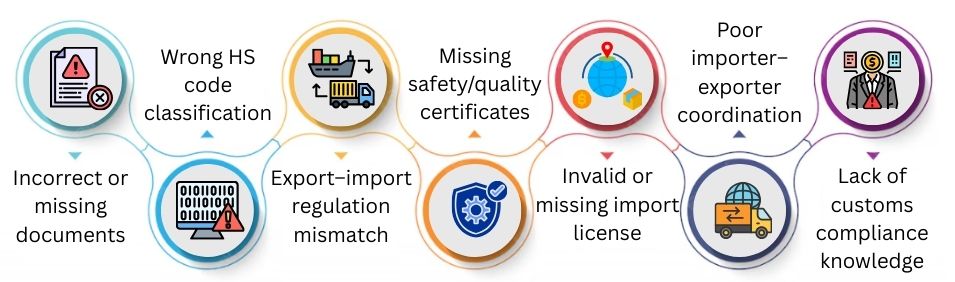
How Indian Pharma Exporters Ensure Seamless Clearance
Pre-Configured Document Sets

Country-Specific Documentation Expertise
Harmonized System (HS) Code Mastery
Digital & Tech Integration for Faster Processing
DGFT &IceGate Integration
DGFT (Directorate General of Foreign Trade) and ICEGATE (Indian Customs Electronic Gateway) are websites. Exporters use them to file their paperwork.
ICEGATE cuts down on manual work by using computers to submit shipping bills, match invoices, and give real-time reports.
Pre-Arrival Clearance (PAC)
Before shipment, top Indian exporters provide pre-clearing papers to buyers. This helps importers begin clearance procedures early.
Sometimes, papers are distributed via blockchain-secured systems for extra tamper-proofing and traceability.

API-Linked Updates for Buyers
Through API linkages with logistics partners, c. API-Linked Updates for Buyers to track real-time shipments and update customs clearance statuses.
Importers get proactive alerts about hold-backs, clearances, or estimated delivery schedules.
What Importers Can Do to Make Customs Smoother
Indian companies that bring in medicines need to get involved and work together to make sure that customs handling goes smoothly.
Make sure you know the HS codes and product description from the Indian exporter before you cross the border. This prevents items from getting jumbled up and causing delays.
Importers should obtain an import license or drug registration approval from the government before the shipment arrives.
Customs delays can be cut down by coordinating checks and rules that need to be followed before shipping.
Using certified customs workers with experience in pharmaceutical shipments makes it easier to follow local rules.
Importers should talk to Indian suppliers about documents, inspection times, and the rules of the target country.
Keep up with changes to local import rules, taxes, and health authority standards so you don’t have to deal with problems at the last minute.
When companies work with Indian partners, they can speed up customs and get important medical goods to patients faster.
Indian Institutions Supporting Smooth Pharma Trade
Pharmexcil: Export documentation training & guidance
Pharmexcil, India’s Pharmaceuticals Export Promotion Council, provides training and tools for export documentation.
This support helps Indian pharma exporters. Pharmexcil supports exporters through training on country rules, paperwork, and best practices. They offer seminars, workshops, and detailed advice.
They simplify paperwork, reduce errors, and help exporters meet global customs standards. This makes trade smoother.

CDSCO: Validates safety and quality certifications
The CDSCO regulates pharmaceuticals and medical devices in India. It reviews and approves GMP and product registration files.
This ensures safety, effectiveness, and quality. Importing countries often require these certifications for customs clearance.
CDSCO builds trust in Indian medicines by following strict global standards. This helps international regulators and customs approve them more quickly.
DGFT: Facilitates trade compliance and licensure
The Directorate General of overseas Trade (DGFT) is responsible for India’s overseas trade policies.
It issues commercial permits, including the Importer Exporter Code.
It offers exporters compliance management solutions like online document filing and verification.
DGFT helps exporters follow trade rules. It cuts down on paperwork by working with customs systems like IceGate.
This makes clearances faster and easier. Pharma exports require institutional support to be timely and compliant.
Conclusion: India’s Pharma Exporters Make Customs Easy
One of India’s biggest strengths in pharmaceutical exports is its world-class manufacturing skills.
It also excels at handling cross-border trade quickly and accurately.
Indian pharmaceutical exporters are not just suppliers; they are strategic partners.
They ensure that buyers in other countries receive quality medicines without the hassle of customs.
India has a strong grasp of regulations and uses tech-backed paperwork systems.
With support from national trade organizations, it has become a safe hub for pharmaceutical exports.
There is no better partner than Indian Pharma for importers who want to make the customs clearance process quick, reliable, and legal.
