


Why Price Volatility is a Major Concern for Importers
Today’s changing global trade prices put a strain on importers, especially in the pharmaceutical field. Here’s why:

1. Global Disruptions
Hikes in raw material prices, shipping delays, and currency changes make it difficult to predict medicine prices.
On top of this, shortages of APIs from countries like China, India’s main supplier, create added pressure.
In 2022-23, India imported a massive amount of APIs from China to the tune of over $3.18 billion.
This included almost 90% of key antibiotics, such as penicillin and azithromycin.

2. Budget Planning Woes
Pharma buyers in developing countries confront significant challenges.
Price surges can make it hard to budget, bid on government tenders, and keep enough medicine in stock.
These swings can hold up treatment and harm public health programs.
3. Heavy Import Dependency
India’s pharmaceutical industry ranks as the third-largest globally in bulk drugs, exporting 36% of its output.
The country still counts on China for most of its active pharmaceutical ingredients (APIs).
Supply disruptions like war, pandemics, or trade bans can increase prices and stop production.
4. Indian Manufacturers Step Up
Despite the challenges, Indian drugmakers step up to help.
They offer flexible pricing and value-based deals that create a real impact.
They use their experience in semi-regulated markets like Africa and Latin America to help importers.
This teamwork improves cost management and adapts to the changing landscape of uncertainty.
Key Drivers of Global Pharma Price Volatility
Pharma prices are changing at an unprecedented rate.
Supply chain disruptions and global events are the primary causes. Here’s what’s driving the volatility:
India, a powerhouse in generic drug exports, faces a critical conundrum.
The company gets more than 70% of its active pharmaceutical ingredients (APIs) from China.
This dependence creates waves in the market.
Prices fluctuate when Chinese supplies are limited or costs increase.
Events like COVID-19, wars, and natural disasters can cause supply chains to break down, resulting in delays and cost overruns.
Pharma companies are having trouble getting drugs made and shipped out on schedule, which is pushing prices up even more.

Soaring energy prices and a shortage of raw materials are putting pressure on drugmakers.
The lack of potash and critical metals is pushing production costs to new heights.
As a result, the price of medicines is climbing, leaving everyone to bear the burden.
In semi-regulated markets, entry barriers are low, enabling many players to enter the market.
As a consequence, there is severe rivalry, lowering prices and reducing profit margins.
Companies cut costs to stay afloat, causing price fluctuations and unstable profits.
How Indian Pharma Manufacturers Provide Price Stability
India’s pharmaceutical industry is managing to keep costs down, making medicines affordable for people in India and those overseas.
Here’s how they do it:
In-House API & Bulk Drug Production
Indian pharma companies are now producing more Active Pharmaceutical Ingredients (APIs) in-house rather than relying on Chinese imports.
By doing so, they’re saving on costs and reducing delays. This shift is also helping to keep prices stable.
Local production boosts the supply chain’s strength in global crises like pandemics.

Long-Term Pricing Contracts
Manufacturers often make long-term price deals with buyers in India and abroad.
These contracts protect against sudden price changes. This helps in better planning.
They build trust and maintain steady exports, even when raw material costs rise.
Strategic Inventory Management
Companies stock up on crucial raw materials, including APIs and Key Starting Materials (KSMs).
It’s a way to keep production steady, even if supply chains are disrupted.
When inventory is planned well, there are fewer shortages and more stable medicine prices for consumers.
Flexible Payment & Trade Terms for Importers
Importers can gain an edge in today’s changing markets.
Flexible currency and credit solutions make global trade easier to manage.
Currency Flexibility
Global trade issues make quick currency options crucial.
Flexible choices help importers thrive, even with changing exchange rates.
Indian pharma companies work well with USD, EUR, and local currencies.
This ensures smooth transactions and keeps you safe from sudden currency shifts.
It also means you have less to worry about when prices change due to supply problems or trade balance changes.
Credit Options for Repeat Importers
Long-term importers can now choose flexible credit options that make it easier to manage payments.
Cost-Efficient Packaging & Consolidated Shipping
Businesses can earn more by making their shipping and packaging more efficient.
Here are some effective ways to do so:
Picking the right package size is a smart way to save money.
Smaller and lighter packages lead to lower shipping costs, giving you extra savings.
Avoid oversized boxes; they add to your expenses and carbon footprint.
Package wisely to save money and protect the planet.
Using recycled paper and plant-based packaging is a smart choice.
Eco-friendly materials waste less and cost less. They also show your commitment to sustainability.
Eco-conscious shoppers appreciate these products. They also enhance the brand image and boost profits.

Bringing together small shipments into one large delivery can save a lot of money.
Businesses cut shipping costs by using bulk shipping discounts.
This way, delivery gets faster, and logistics become more efficient.
It makes the whole process smoother.
Partnering with consolidation-focused logistics providers revolutionizes shipping.
They enhance the way we handle things, reduce costs, and speed up delivery.
This efficiency boosts businesses and brings joy to customers.
Price Forecasting & Raw Material Trend Alerts
Tracking prices and raw material trends is key for businesses.
It helps them remain competitive and respond to market developments. Key trends to watch in the industry include:
Customer preferences can change. Economic factors can also affect demand, causing unexpected shifts.
Predicting prices is a challenge for businesses. Pandemics and other major events can increase price changes.
This can turn small issues into big problems.
Unpredictable events like natural disasters and political unrest can mess up supply lines.
These events restrict the supply of key raw materials, leading to higher costs.
Production delays are a significant problem.
They can mess up even the most carefully prepared operations.
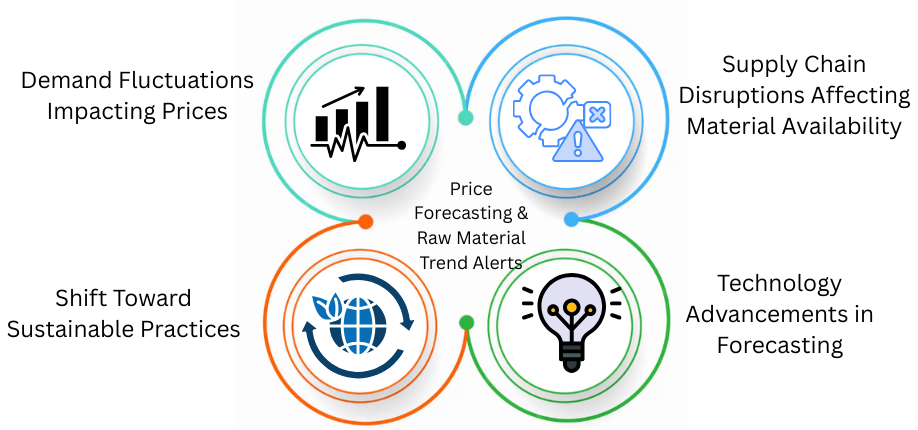
New tools like AI and advanced analytics are changing price forecasting.
They analyze data to reveal price trends that were previously hidden.
This insight helps businesses stay ahead when supply chains are unstable.
It lowers the risk and makes for smarter and speedier decisions.
There is a growing demand for eco-friendly raw materials in various industries.
Going green is a smart move for companies.
As people and governments opt for eco-friendly options, suppliers using sustainable methods have an edge.
How Importers Can Leverage Indian Manufacturers Effectively
India is a top manufacturing hub, drawing importers worldwide.
It’s important for them to keep up with changes in the business.
Indian manufacturers are now more open to flexible, outcome-based ways of working.
This method helps agile teams work together across functions to get business results.
They boost quality and efficiency by focusing on delivery speed, leading innovation.
In the modern age, harnessing data is essential.
Indian manufacturers can boost data quality and integration by using tools like DataOps.
This automation speeds up decision-making and opens new paths for innovation.
Embracing these changes is crucial to staying ahead in a competitive world.

AI and machine learning are shaping a new era in manufacturing.
Indian firms are adopting MLOps to use AI effectively.
This approach simplifies production, reduces mistakes, and enhances scalability.
It’s a setup that meets today’s market needs.
To meet global standards, manufacturers in India are focusing on developing talent.
They are hiring experts in digital tools, data science, and AI.
This helps them meet international quality expectations.
This commitment lifts their standards and gives them the confidence to shine on the global stage.
Indian manufacturers are embracing sustainability with commitment.
They are cutting down waste and optimizing energy use.
This method helps them meet global environmental standards.
They take responsibility through eco-friendly efforts that appeal to green consumers.
Conclusion: Indian Pharma as a Strategic Ally Against Volatile Markets
Indian pharmaceutical makers are key in helping importers deal with price ups and downs.
By producing raw materials locally, they can offer flexible pricing options.
They help stabilize a market that is often uncertain by managing their inventory well.
Their support offers stable prices and simpler logistics. This helps importers stay on track.
Even with global supply chain issues, they can still operate smoothly.
This reliability is a big reason India is a go-to partner for the global pharmaceutical industry.
