


The Importance of Smooth Documentation in Pharma Trade
India is a trusted global producer. It supplies high-quality, low-cost medicines to over 200 countries.
This huge network of exports shows how important the country is for ensuring everyone can get vital medication.
Pharmexcil says India’s pharmaceutical exports hit $27.9 billion in FY 2023–24.
This rise shows the worldwide demand for Indian generics, APIs, and finished formulations.
Complete and correct documentation promotes a smooth customs clearance and avoids regulatory delays.
It is very important for keeping the supply chain running smoothly and avoiding costly delays or rejects.
Common Documentation Challenges Faced by Importers
Missing or wrong documents, such as the Certificate of Analysis (COA), Certificate of Origin (COO), GMP Certificates, or Free Sale Certificates, can delay customs processing.
Notarization or diplomatic attestation is needed in some countries, and the document will be rejected if it isn’t done.
Before importing, you often need product registration dossiers and site master files.
Approval delays can happen for a few reasons. There may be insufficient clinical trial data.
Sometimes, information about the manufacturing process is missing.
Other times, it could be due to gaps in pharmacovigilance plans.
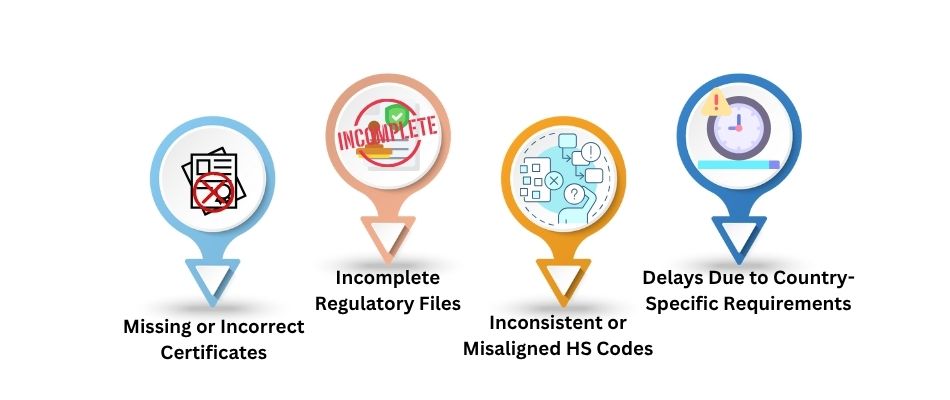
HS Codes That Don’t Match Up or Are Misaligned Harmonized System (HS) codes are used to identify goods for customs reasons.
If you choose the wrong HS code, it can cause Getting it wrong, Incorrect applications for tariffs, Delays in getting through customs.
Different countries have different rules about imports.
Some must be translated into other languages, tested in batches, or come with extra product statements.
If shipments don’t follow these rules, they could be stopped at the port of entrance.
Standard Pharma Documentation Provided by Indian Exporters
Commercial and Shipping Documents
Product-Specific Technical Documents
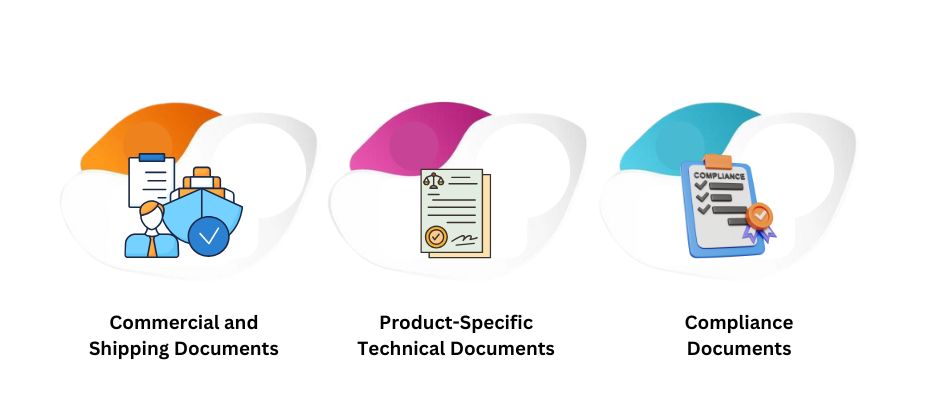
Compliance Documents
How Indian Pharma Companies Simplify the Process
To ensure the documentation meets standards, Indian pharmaceutical exporters use effective methods. This way, they keep it correct, compliant, and suitable for importers.
They use standardized templates for common documents. This saves time and cuts down on errors in documentation.
Specialized staff manage all documentation, ensuring it is accurate and meets the legislative requirements of the importing country.
Automated platforms boost efficiency and transparency. They allow real-time generation, tracking, and submission of export documents.
It’s common to provide documents in the local language. This follows national customs and meets regulatory needs.
Exporters can reduce delays by teaming up with local specialists. This helps ensure their documents meet local legal and regulatory standards.
Role of CDSCO &Pharmexcil in Supporting Compliance
The Central Drugs Standard Control Organization (CDSCO) checks that Indian drugs exported worldwide are safe and meet high-quality standards.
It gives out important labels like GMP, CoPP, and product titles.
Pharmexcil, the official export promotion council, supports exporters. It advises on regulations.
It also forms trade teams and talks with foreign authorities to fix compliance problems.
It’s easier for Indian medicines to reach new markets this way, and people worldwide still believe them.
How Importers Can Support the Process
Effective documentation requires reciprocal engagement. Importers can significantly contribute to the facilitation of seamless paperwork by:
Conclusion: Documentation Doesn’t Have to Be a Bottleneck
Indian pharmaceutical companies are adapting to changes in the global market.
They are simplifying paperwork processes to meet new challenges.
They use digital tools, skilled documentation teams, and follow regulations.
This way, importers face fewer hurdles and enjoy better efficiency. Documentation supports growth.
It does this by promoting clear communication and understanding rules.
So it doesn’t hold growth back.
